Showing posts with label bojagin. Show all posts

Sunday, October 7, 2018

Water Drops: Bojagin Wrapping Cloth


Bojagin wrapped object

The latest in a series of "bojagin" - Korean-inspired cloths hand-stitched together from scraps, each designed to wrap a specific object. Click here to learn more about bojagin and to see the rest of the bojagin on this blog: Bojagin Series.

This piece utilizes scraps of indigo-dyed cloth from an earlier shibori session.

"Indigo Girls" shibori session

Here is the water drop bojagin displayed as a wall hanging.

Indigo scraps, recycled thrift store men's shirts, redwood branch

Close-up detail

Close-up detail
And here is the object to be wrapped: a vintage brass water whistle in the shape of a bird. You fill the base with water, blow, and the result is chirping bird sounds.

Object to be wrapped: vintage water whistle

And finally, the object wrapped. This is the magic of bojagin, when the wrapped object holds untold possibilities and unlimited potential.

Wrapped in wonder

Thursday, May 10, 2018

Celestial Gifts: Bojagin-Wrapped Objects


Scraps of the cosmos

I am rounding out my obsession with Korean-inspired wrapping cloths with photos of two final pieces before moving on to an entirely unrelated project. To learn more about these cloths, called "bojagin," click on this link: Bojagin: The Gift of TravelClick here or in the sidebar to see all of the works in this category: Bojagin.

These two final bojagin are vaguely related to the cosmos and celestial objects. Materials for this first piece include scraps of red silk from a Chinese jacket, pieces of recycled men's shirts from the thrift store, and remnants of indigo-dyed cloth from West Africa. If you look more closely, you will see that there is a frenzy of activity going on as the indigo scraps rocket across the background.

Fabric scraps rocketing through space

The object to be wrapped is a chunk of meteorite from the caves near Cuetzala in Mexico. Local children find them and sell them on the street, and the little girl who sold me this one pointed out how special it is because it looks just like a fat little woman. I think it looks like a spaced-out Venus of Willendorf.

Object continuing on its celestial travels

And finally the point of all of this: the object wrapped. It is a little bundle of mystery, potential, and magic.

Wrapped

The second piece is all about comets, and the end result looks mid-20th-century-industrial-Russian to me. I don't know why, and I'm the one who made it. That is often the case, but in this particular instance I charged myself with suspending (in so far as possible) all cultural baggage regarding color and aesthetic judgement. Materials include pieces from recycled thrift store men's shirts and scraps of gray polkadot fabric from a robe I stitched years ago for the sole purpose of looking glamorous at Northern California hot springs and later cannibalized to make other stuff. Here is the result.

Comets in the night sky

I got admittedly carried away with the comet tails.

Stitched comet tails

The object to be wrapped is a tin container for tea, formed in the shape of a cat, purchased in Japan fifty years ago. Little containers like this liven up a traditional tea ceremony. If you have to ask about the connection between cats and the cosmos, you haven't been paying attention.

The object: a tin cat box

The box in open position

And finally, the object wrapped. And that, my friends, is the end of stitching bojagin for a while.

Wrapped cat

Thursday, March 15, 2018

Bojagin 4: Wrapped Fish


Wrapped fish bojagin

Yes folks, my obsession with bojagin continues. To read the back-story on these Korean-inspired wrapping cloths, each tailored to wrap a specific object, go to the first posting — Bojagin: The Gift of Travel, or click on "bojagin" in the index to the right. This time around, we are wrapping fish and the bojagin itself has an underwater theme.

Bojagin unfurled and hanging from branch

Mixing and matching from my bins of fabric are part of the joy of this process. Here, materials include two different scraps of indigo-dyed cloth, a fragment of woven Guatemalan cloth, cotton scraps from a robe I made specifically to wear at hot springs, and a panel of old kikoy fabric from Kenya. It is all bound together with lots and lots of Japanese-style sashiko stitching.

Detail: fabric photo transfer of image from Persian manuscript

Bojagin are all about binding up luck and the object to be wrapped. In this case the object is a ceramic tea ceremony container I found in Japan about fifty years ago.

The object: ceramic tea ceremony container

Container opened

And finally, we have the object wrapped as it was meant to be. I am finding the final wrapped object and the accidental/serendipitous juxtaposition of fabrics and stitching the most aesthetically appealing part of this process.


The object wrapped

Monday, March 5, 2018

Bojagin 3: White on White


Wrapping cloth

Wrapping cloth in use

This is the third in a series of Korean-inspired wrapping cloths called bojagin. For the back story see Bojagin: The Gift of Travel, and to see the whole series click on "bojagin" in the blog index to the right. As with all bojagin, this cloth was created to wrap specific objects. And presumably the good luck that wrapped bojagin contain is safely tucked inside. 

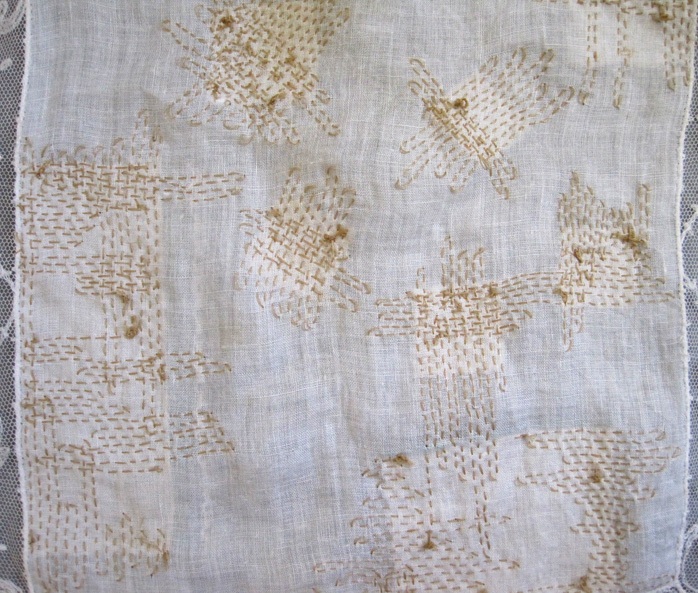
Materials for this bojagin include an assortment of vintage handkerchiefs and napkins. While the title is "white on white," I used tan thread to highlight the stitch work. Below are some close-ups of stitching detail.

Corner and hanging loop detail

Detail: bottom of piece

Detail: white on white

I know I am not the only sewer out there who occasionally gets a thrill from flipping a piece over and looking at the stitching from the back, usually unexposed side. Here is the hidden side of this piece.

Detail: back of piece

A wrapping cloth is all about the object(s) to be wrapped. In this case, a trio of seeds collected from around the world that look like beautiful, polished wood sculptures.

Objects to be wrapped

And finally, once again, the wrapped objects.

Wrapped objects

In my next post, featuring yet another bojagin, I will include a wrapping how-to illustrating how my bojagin design works for both hanging and wrapping.

Monday, February 26, 2018

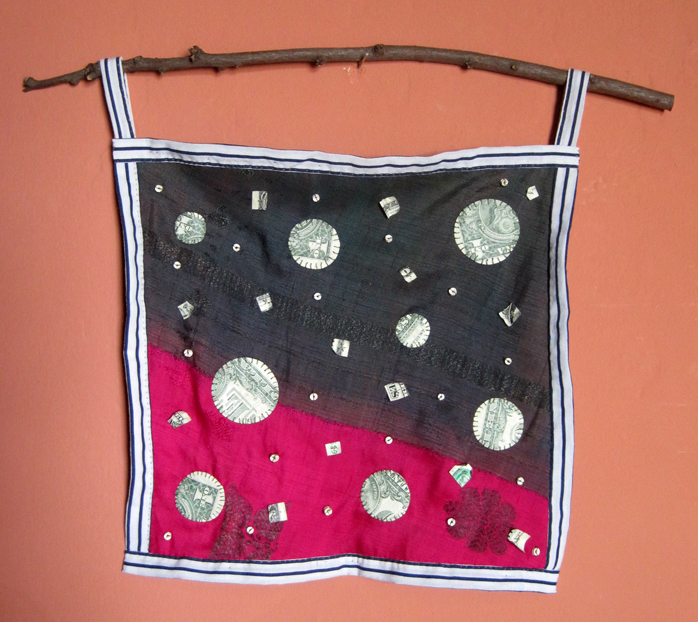
Bojagin 2: Cash Cow


Wrapping cloth

Wrapped object

This continues the series of wrapping cloths inspired by the Korean tradition of "bojagin," gift-wrapping cloths that are stitched with a specific object in mind. See the previous post—The Gift of Travel—for more about the inspiration and backstory.

This cloth has the subject of currency as a focus. Materials include a U.S. one dollar bill; tiny shell beads that harken back to Native American currency; and a 150-year-old Indian temple sari, itself a form of currency and stored wealth.

Detail

Detail

I particularly like the section of sari cloth below, where you can see a mended, rewoven section done many, many decades ago by an earlier owner.

Detail

And now to the object to be wrapped: an old brass coin bank shaped like a cow.

The object to be wrapped

And finally, the wrapped object. The Korean belief is that a wrapped object, by the very nature of being wrapped, contains good luck.

The wrapped object

Thursday, February 22, 2018

Bojagin: The Gift of Travel


Wrapping cloth unfurled

Cloth in use

A recent visit to a show on the history of Korean fashion at the Asian Art Museum in San Francisco stimulated an interest in "bojagin," Korean wrapping cloths, a tradition that dates back to the Three Kingdoms period (55 BC to 668 AD). Usually square, they are stitched using pieced cloth, often silk or ramie. Those employing patchwork or scrap fabric are known as "chogak bo." A particularly charming aspect of this tradition is concern for that which is being wrapped, to the point where a bojagin may be created especially to wrap a specific object. 

Close-up detail

I started stitching my own chogak bo and got completely hooked. Here is the first in a frankly obsessive series.

Close-up detail

My bojagin are technically chogak bo, since they are all stitched from scraps and remnants, some recent acquisitions, and some that have been in my possession for over fifty years. My wrapping cloths are also a themed interplay between the cloth and the object to be wrapped.


Corner detail

Materials for this wrapping cloth include scraps of a 150-year-old Indian temple sari, woven cloth from Guatemala, assorted beads, a scrap of upholstery fabric, an odd medallion of an Arab woman of unknown origin, and a Laotian 500 kip note.

Close-up detail

The object to be wrapped is a carved wood Buddha from Laos in the "no more fighting" pose.

Carved wood Buddha

And finally we have the object wrapped.

Wrapped Buddha

Stay tuned over the next few weeks for many more wrapping cloths to come.


Related Posts with Thumbnails